This article is from the winter 2025 edition of Mobile Baykeeper’s print quarterly, CURRENTS. The magazine is mailed to active members who have given more than $50 in the past year. To get on the magazine’s mailing list, donate here.
By Sam K. Wilkes | Photos by Courtney Mason
Back in the dog days of summer, I took a day trip with a friend to Pelican Island, located just south of Dauphin Island near the mouth of Mobile Bay. As my friend beached his boat, I noticed a lone chair and umbrella set below the wind-carved dunes, far from the water’s edge. My friend said a “bird lady” was there last time, keeping tabs on the island’s shorebirds. She wasn’t around this day, but her subjects were in full force.
More than fifty yards to our right was a cacophony of chatter as hundreds of Terns, Black Skimmers, and Plovers claimed a shallow cove. They mingled into a large flock of black and white heads, fluttering and picking along the island sand. Moving a bit closer, I focused in on the unique Black Skimmers, never having seen one before. They stood out with their oversized red-orange and black-tipped beaks, which contrasted their white bellies and black backs that cloaked their cat-like eyes. The only bird in the world with vertical slit-shaped pupils, since they do not rely on sight for feeding. Instead, they feel for the fish, hunting at twilight with the help of their protruding lower beaks, with an underbite that would make Marlon Brando look twice. Noticeably longer than their top beak, their mandible adapted perfectly for slicing through the water as they skimmed over the surface, feeling for a familiar bump to then snap up a fish. They have been called “aerial beagles” or “seadogs” for their short barking calls and their unique hunting methods. I decided then and there the subject of my next CURRENTS article. Coincidentally, a few days later, our editor emailed me, suggesting I reach out to Alabama Audubon to gauge interest for a possible piece on shorebirds. I’m not sure how he already knew.
Taking Flight
If you’ve strolled along a beach in lower Alabama lately, chances are high that you’ve come across a “KEEP OUT” sign warding off humans from the bird nesting areas. In the wake of the Deepwater Horizon oil spill, a considerable amount of research was performed to assess the harm imposed on the coastal bird populations. Through that research, many of the Gulf states started to appreciate the importance of monitoring shorebirds. This realization led to the formation of the Alabama Coastal Bird Stewardship Program (“ALCBSP”) in 2017.
The ALCBSP started with funding from the National Fish and Wildlife Foundation’s Gulf Environmental Benefit Fund and the Alabama State Lands Division of the Department of Conservation and Natural Resources. The program is currently funded with Deepwater Horizon natural resource damage settlement funds and the National Audubon Society.
“We monitor the entire Alabama coast from Bayou La Batre to Orange Beach, including nearshore islands in Portersville Bay and beaches along Mobile Bay,” says Olivia Morpeth, a coastal biologist with Alabama Audubon, working on the ALCBSP team. “But much of the beach-nesting bird monitoring occurs in areas with minimal coastal development. Sites like Dauphin Island, Bon Secour, Gulf State Park, and nearshore islands are critical for these birds.”
The ALCBSP only monitors coastal shorebirds. Most of these species require a sandy beach habitat for nesting, whether it be a mainland beach, barrier island, or nearshore island beach. With a team of two full-time biologists, two seasonal biologists, and one full-time coastal outreach manager, the ALCBSP not only aims to protect the sensitive beach-nesting bird species and their habitats, but to also educate the thousands of beachgoers that share the sugar-white sands of coastal Alabama.
“Most of the time, people on the beach don’t even realize that birds are there trying to nest and raise their young,” says Olivia.
Birds of Priority
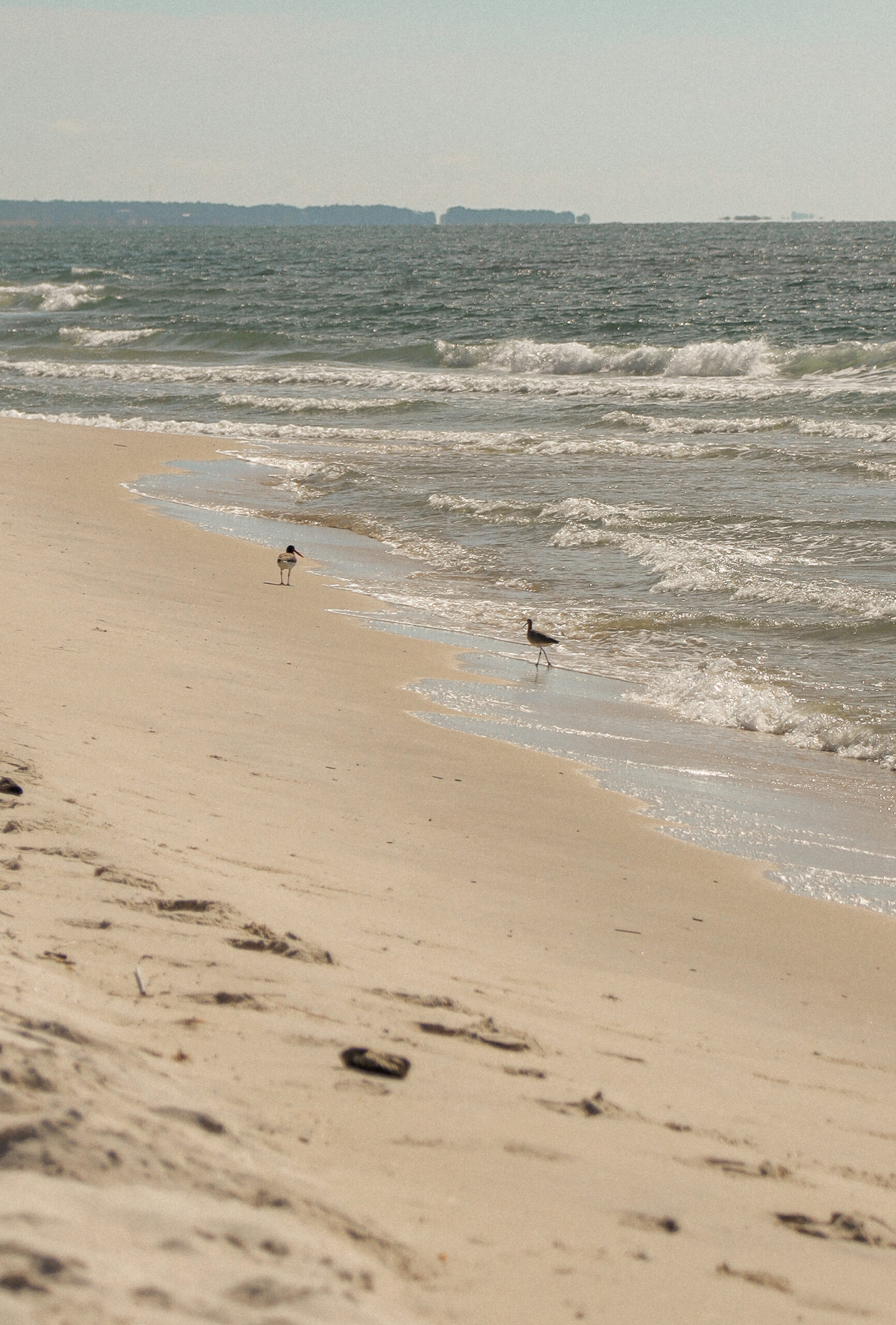
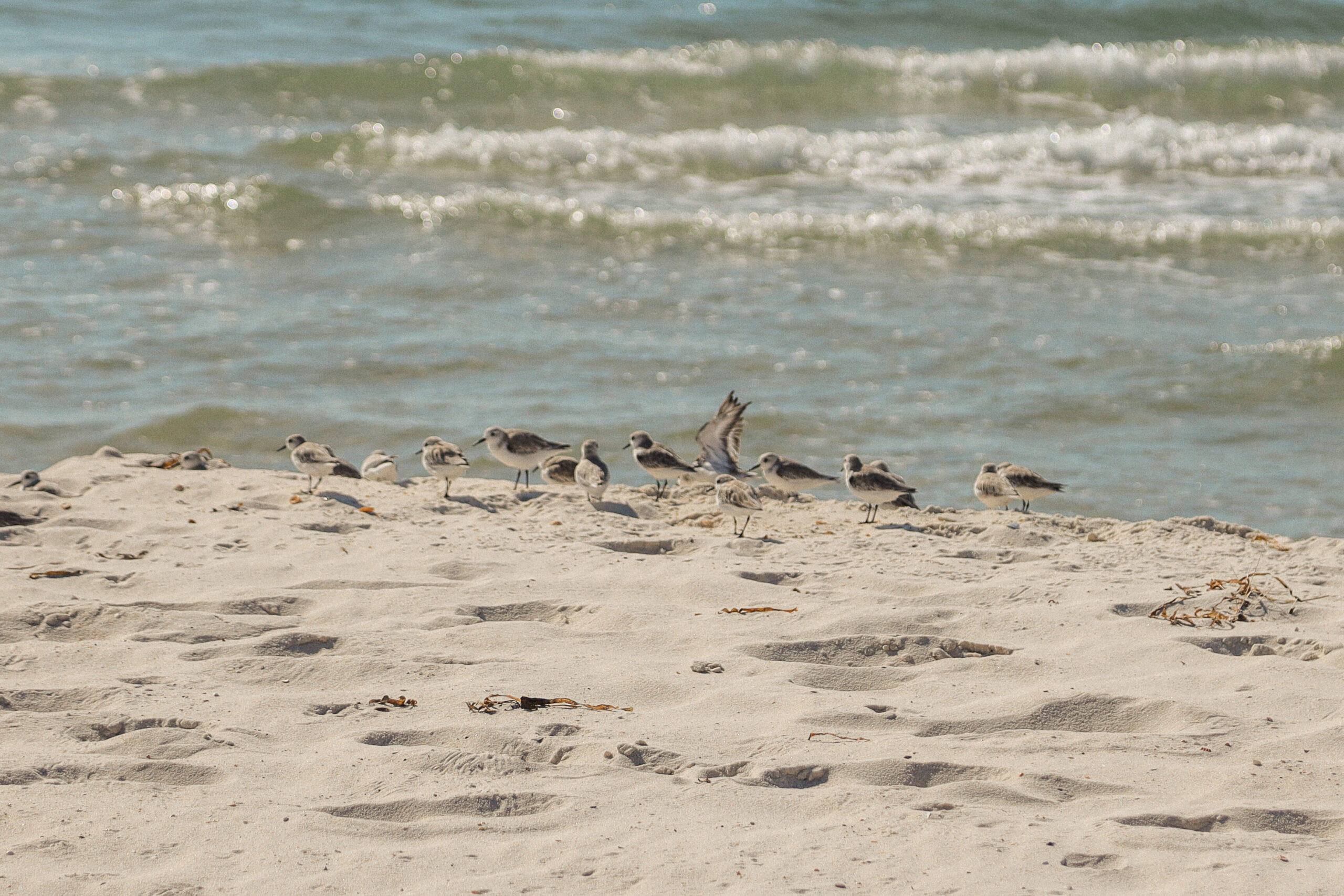
The ALCBSP focuses its monitoring efforts on our area’s priority species, which include the Black Skimmers, American Oystercatchers, Least Terns, Gull-billed Terns, Snowy Plovers, Wilson’s Plovers and Reddish Egrets. However, they also collect data on some non-focal species — Royal Terns, Sandwich Terns, Caspian Terns, Killdeer, and Common Nighthawks.
Each of these species comes with its own unique traits and behaviors. The American Oystercatcher is visually striking with its dark head, red-yellow eyes, and blazing red bill, as if an ordinary seagull had dressed for Halloween. You probably could guess by the name, but this species survives almost exclusively on oysters, clams, and mollusks, using its long sharp beak to pry open the clenched shells. If there are no crevices to leverage, then they’ll simply hammer the shells with their oversized durable beaks. Oystercatchers are the only species in the area with this talent, which often attracts other birds to mooch off their surfside raw bar.
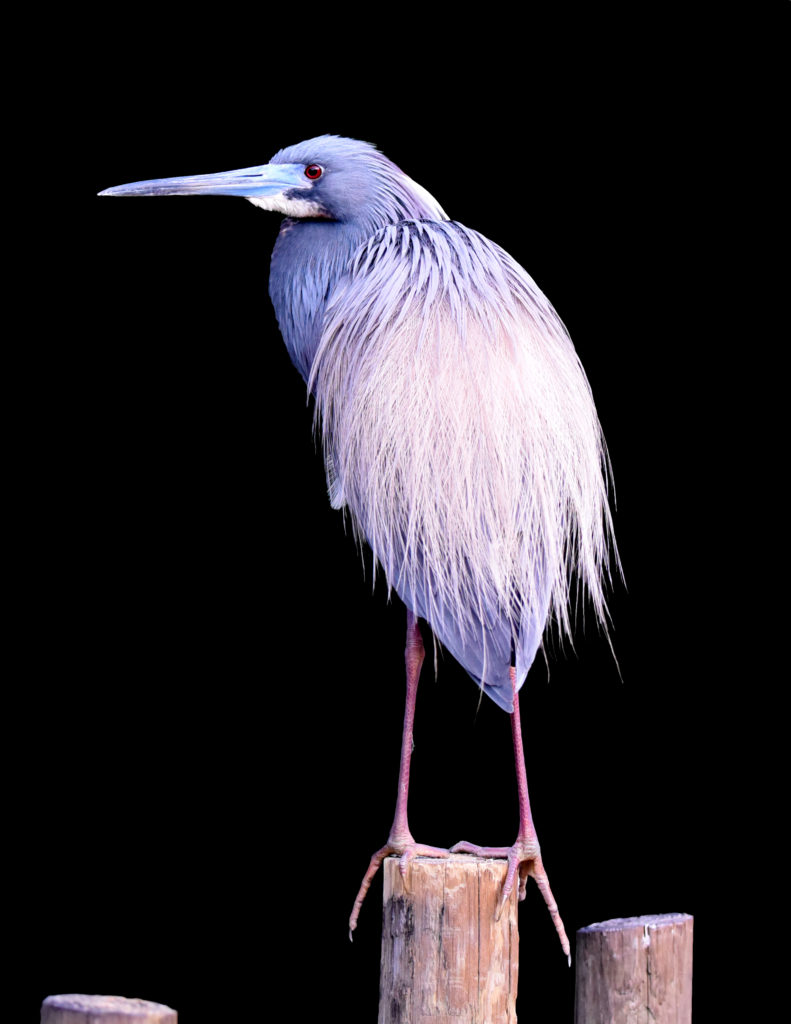
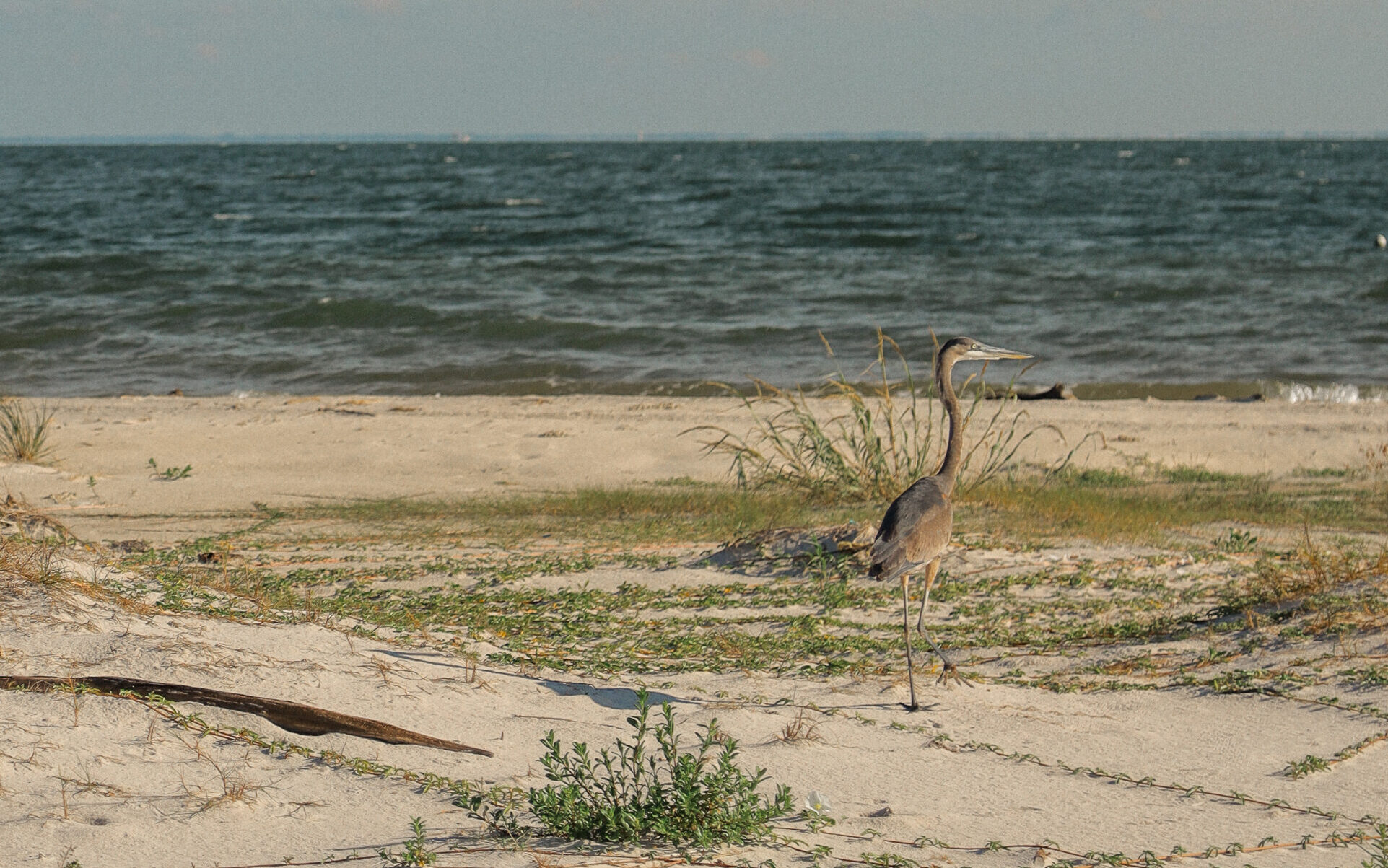
The Gull-billed Terns, with their thick black bills and caps, curiously prefer not to plunge-dive for fish like most Terns. Instead, you’ll see the Gull-billed Terns performing aerial swoops to delicately pick small fish off the surface or hawk-flying insects. The Snowy Plovers and Wilson’s Plovers are similar to Sandpipers, but with shorter bills. These sandy brown, white-bellied cotton balls skitter along the tide line in a run-stop-run pattern, picking morsels from the sand with their slender bills. While at the other end of the height spectrum, the Reddish Egrets, similar to a Great Blue Heron, tower over the others with their long skinny legs, curvy necks, and spear-like bills. They have greyish blue bodies and shaggy cinnamon heads, which gives them their name.
And, of course, the distinctive Black Skimmers, who first caught my attention that day on Pelican Island, with their short barking call and long mandible that cuts through the evening waters, snapping up fish. Resembling a tern and a gull, the Black Skimmers are part of their own family. Even though they have webbed feet, they do not swim and will only wade in the shallows at most. Although their bill is long and oversized, if you view it from the front, you’ll notice it’s paper-thin. And while most birds tuck their heads and beaks into their back feathers as they sleep, Black Skimmers appear dead, splayed out on their bellies in the sand with their long bill extended in the front — a curious sight for any beachgoer.
Most of the priority species remain in our general area year-round, except the Least Terns and the Gull-billed Terns, which usually leave for Central America during the winter months. “Many of these species have breeding populations going as far north as New York,” says Olivia. “And those northern populations will migrate south, while more southern populations can remain year-round.”
Nesting
The Snowy Plovers do not waste any time breeding, and are the first nesters in our area, pairing up as early as Valentine’s Day. Thereafter, the local shorebird breeding season typically runs through August.
The number of nests scattered along the beaches, however, depends on the species. Some shorebirds are “solitary nesters,” meaning a pair will defend a territory from any intruding bird, even their own species, while others are “colonial nesters” who welcome an extended family and others to nest in large groups of their own. “For example, the American Oystercatcher is a solitary nester, and we have about 10 nesting pairs in the whole state,” says Olivia. “The Least Terns, on the other hand, are colonial nesters, and we have recorded roughly 500 breeding pairs depending on the year.”
The nesting period usually starts earlier for the solitary nesters around March, while the colonial nesters begin around late April to early May. Most nesting periods are completed by September when the chicks have fledged.
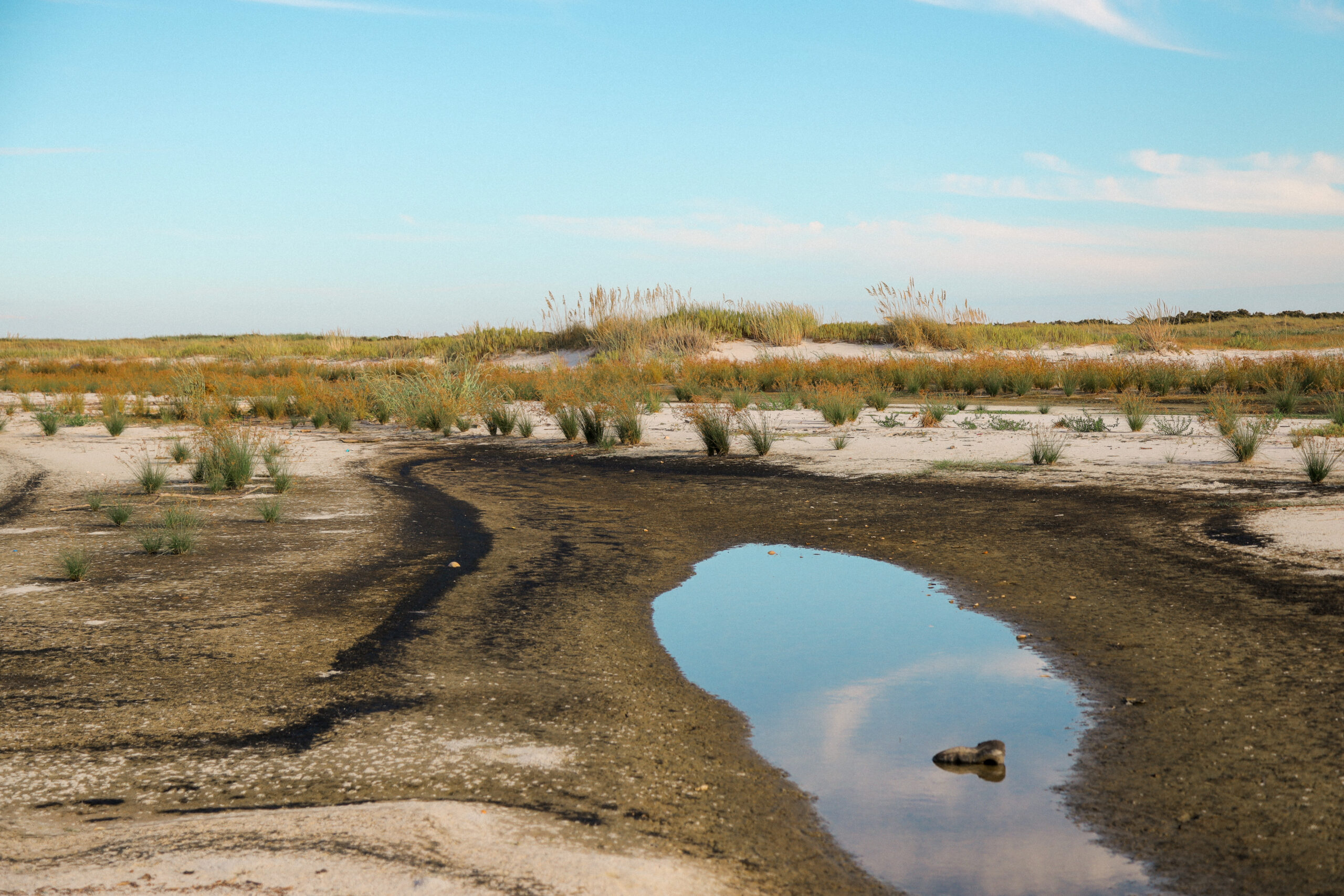
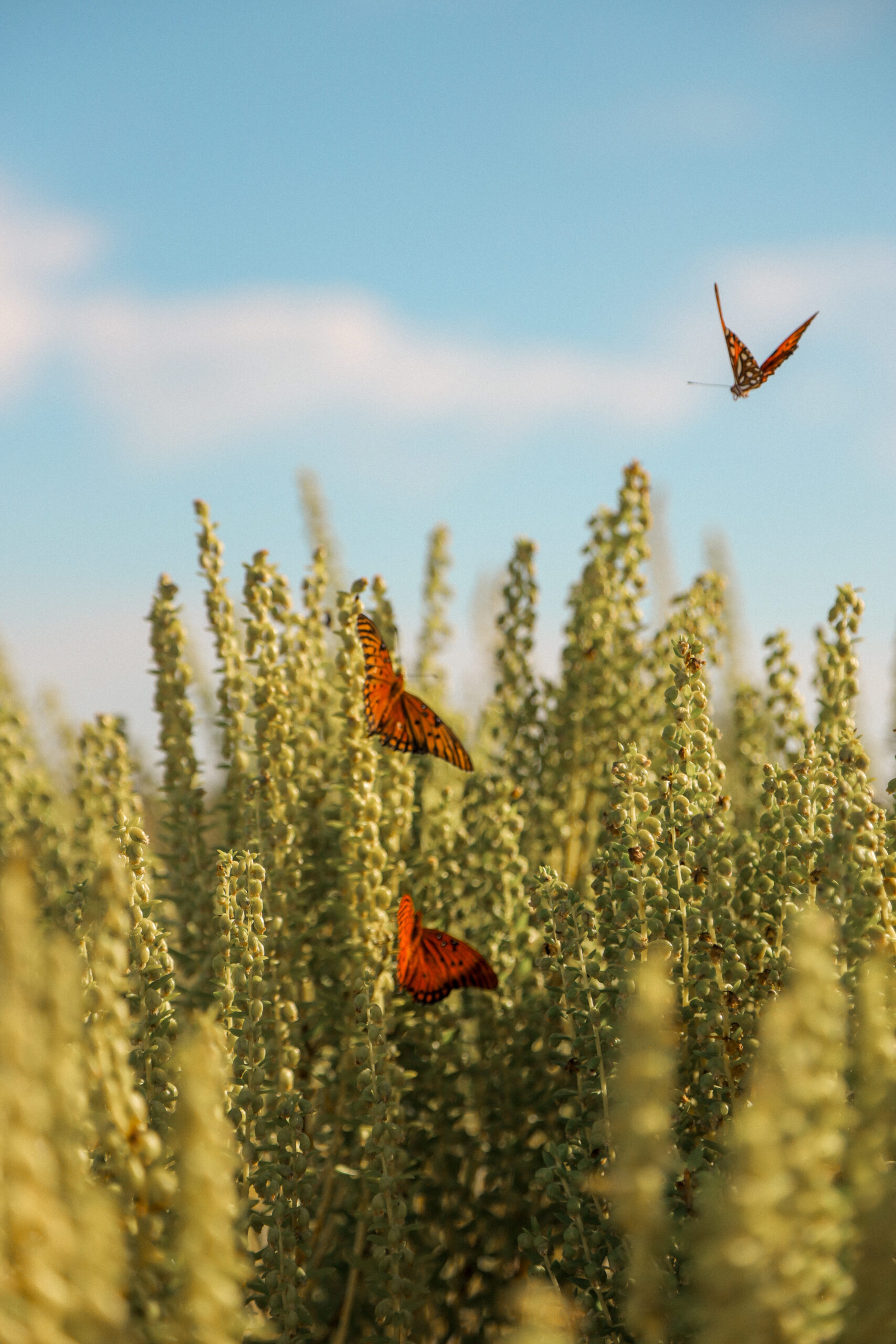
All but one of the priority species will make their nests directly on the beach, creating small “scrapes” in the sand or shell hash. Reddish Egrets, the outlier of the bunch, prefer to nest within “rookeries,” which are mixed flocks of heron, egrets, and ibis. The American Oystercatchers, Least Terns, and Black Skimmers employ simple scrapes, using open sand or shell-hash beaches. The Snowy Plovers and Wilson’s Plovers will gather small shells, pebbles, and sticks to disguise their scrapes, carefully situating them around the flanks of the nest.
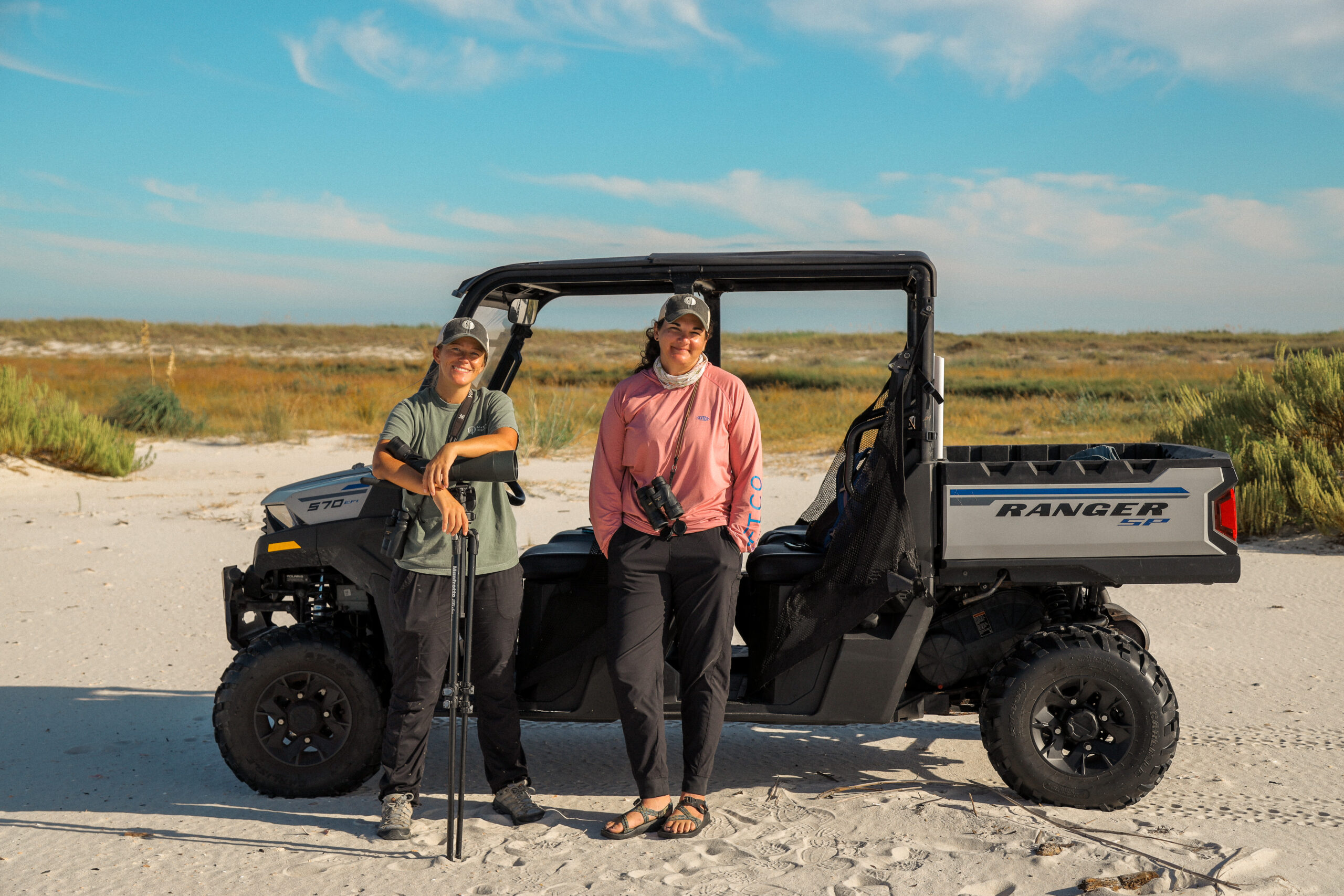
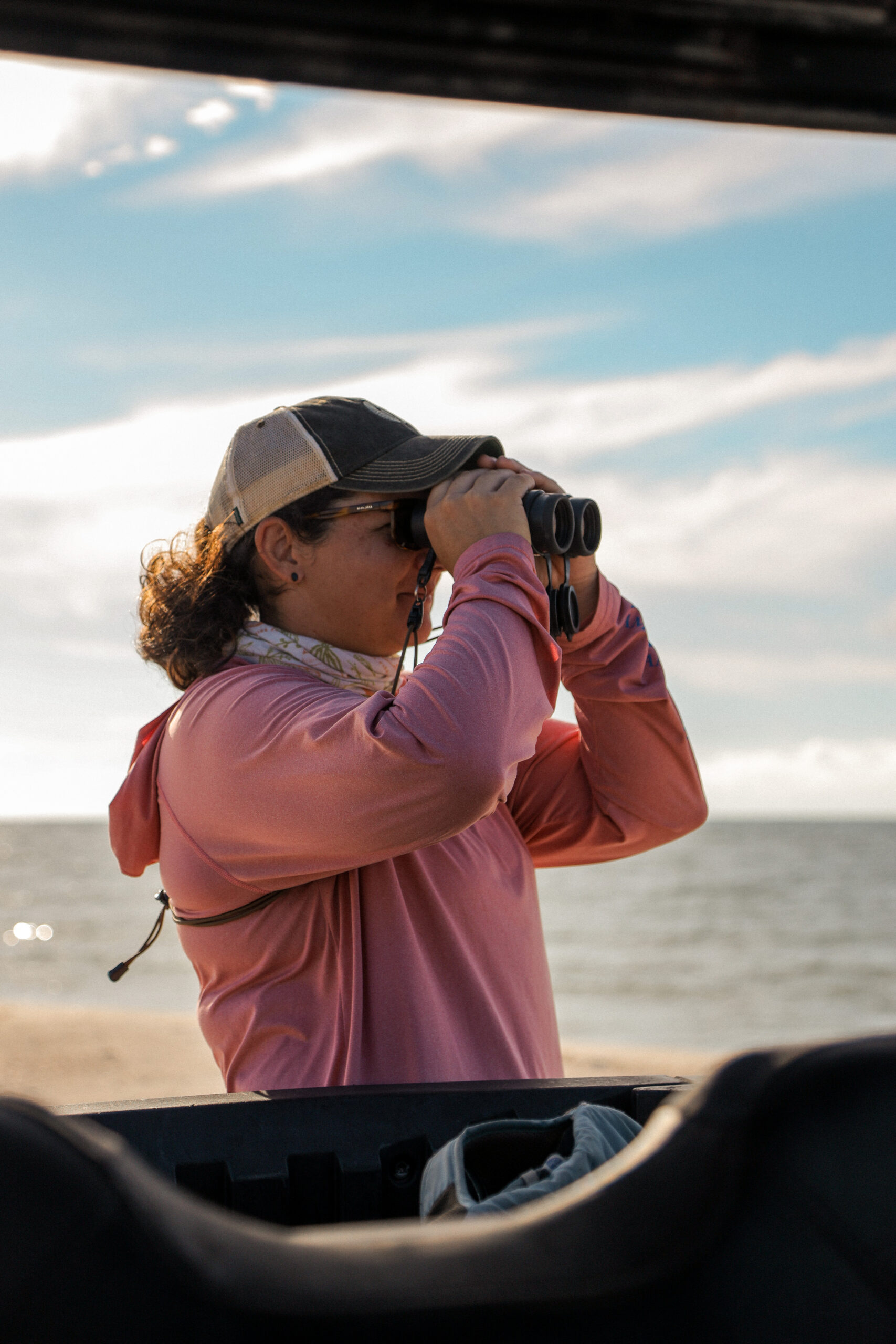
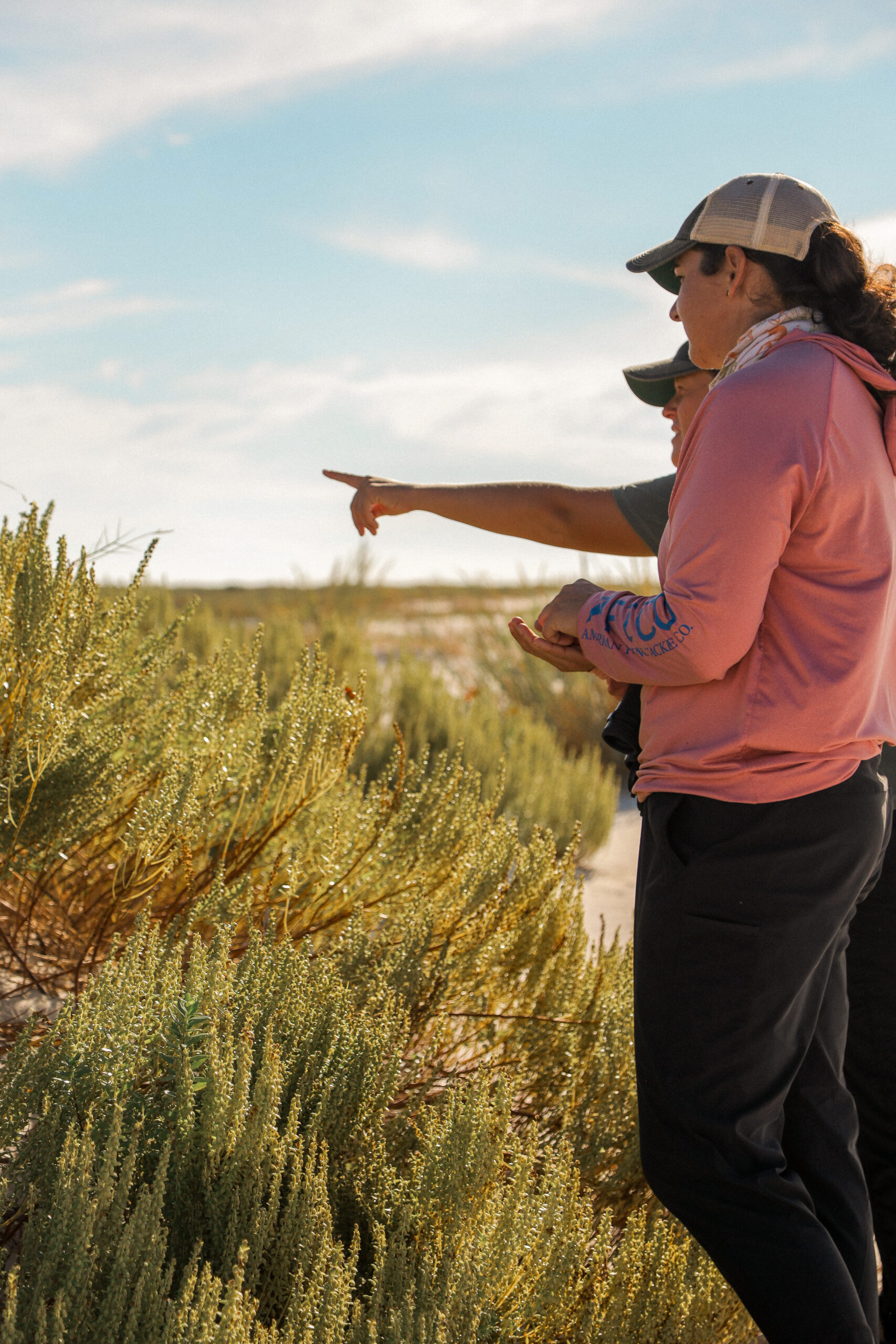
Whether it’s boating to the barrier islands, walking the beaches, or driving a side-by-side ATV to the remote west end, the biologists routinely patrol every foot of the critical habitats along the coast. Some days they may cover 10 miles by foot.
“During the summer, we are out here almost every day surveying sites in search of or to monitor nests,” says Olivia. “And the eggs in these nests are camouflaged extremely well with the surrounding substrate, which makes finding the nests difficult even for us trained biologists. Once a nest is located, we check multiple times a week, collecting the numbers of adults, nests, chicks, fledglings, disturbances, and predators.”
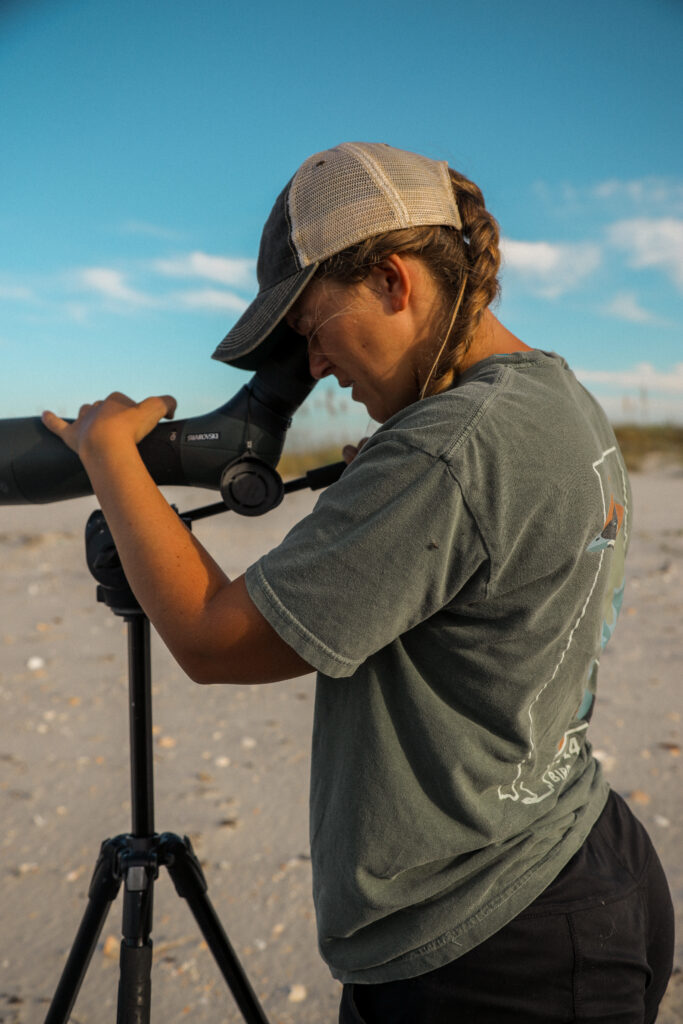
For solitary nesters, if they already know where the nest is located, they will simply view it from a distance. When binoculars aren’t enough, they pull out the spotting scopes with up to 60x zoom capabilities. They’ll also collect photographs for anything from banded birds to chick ages, or to document a nest failure.
“If there is a bird incubating, we can assume the nest is still active without having to approach and see the eggs directly,” says Olivia. “If we notice no incubating birds or no birds displaying protective behaviors, we then approach the nests to check for failures. An example of protective or distracting behaviors is something called a ‘broken wing display.’ We see this the most with our Snowy Plovers and Killdeer — the birds will fake a wing injury by dragging or flapping on the ground. This is used to catch the attention of a predator who thinks that the injured bird would be an easy meal, and the adult bird then lures the predator away from the nest before flying off.”
The routine monitoring can also bring about unique surprises. One unexpected behavior the team observed in 2025 was polygamy among three American Oystercatchers located on Sand Island (a.k.a. “Tern Island”), almost a mile south of Dauphin Island near the mouth of Mobile Bay. “It was very interesting to see three banded adults, two females and one male, caring for two separate nests before raising the chicks together,” Olivia says. “This behavior has been recorded before in other states, but never here, so it was very cool to document.” The polygamous group hatched four chicks but one did not make it, so only three survived to fledge. The ALCBSP team were able to band the chicks so they will be able to track their future movements.
Flying into the Future
Banding is a consistent and reliable technique employed to study individual birds. The ALCBSP has successfully banded Snowy Plovers and American Oystercatchers over the last few years. The summer of 2025 was the first season for banding the Least Terns and Black Skimmers. These birds have no allegiance to state boundary lines. Banding data has shown that a Black Skimmer may cruise from beach to beach, or travel down the Gulf of Mexico and come back for their nesting site. Olivia hopes to continue the banding efforts to fully understand the movements of the birds. She’s also hoping to use GPS tracking in the near future to gain even more detailed movement data.
As the program has shown, without historical data, the ability to assess the present situation is limited. Unfortunately, until this program, there were no coherent population or breeding surveys done. “Prior to 2018, there was no consistent data being collected on populations and reproductive success of beach-nesting birds in the state. We had to do a literature review and used available censuses and reports to evaluate populations and breeding metrics from as early as 1911,” says Olivia. “Our review showed a loss in the number of species nesting on Dauphin Island as well as a decrease in the number of pairs nesting there. Overall, we show a decreasing trend in populations and breeding successes for most of our priority species throughout the region. The previous lack of data exemplifies why it is important to continue long-term monitoring efforts. The efforts aid researchers in better understanding populations and allow for tailored management plans to help focal species thrive.”
Shorebirds face enough challenges in their daily survival, but the biggest threats are coastal development and human disturbance. The increased development leaves the shorebirds with less available nesting habitats, making areas like Bon Secour, Dauphin Island, and the Gulf State Park critical to their preservation. Water quality also plays an important role as it directly impacts the populations that the shorebirds rely on for food.
“If there are heavy metals in the water or algal blooms, those toxins can cause serious health problems or even death in shorebirds,” says Olivia. “So keeping the Bay clean and healthy is important for the birds, coastal wildlife, and of course, people.”
But it’s not an us-or-them situation. There are many ways to responsibly grow and coexist. A key component is education. “Through stewardship, we’re working to lessen the impacts of human disturbance by fencing nesting areas and educating beachgoers about the birds,” says Olivia. “Predation and storm events are difficult because they are unpredictable and difficult to manage, but there are small things we can do to help — simple acts such as not feeding wildlife and disposing of trash properly can help greatly and reduce attracting predators such as raccoons, foxes, gulls, and coyotes to the nesting sites.”
If you’ve cruised near the Perdido Pass lately in Orange Beach, you’ve probably noticed some additions. Over the years, the undeveloped Lower Perdido Islands (Robinson, Bird, and Walker islands) have become increasingly popular with boaters. But they also serve as host for several local and migratory bird species. Nearly 30 million birds may migrate through coastal Alabama in one night. But also, during peak tourist season, it’s possible to have more than 500 boats pulled up at these islands at one time. With that amount of intensive use, coupled with the seasonal beatings from tropical storms, damaging erosion and loss of critical habitats have been the norm.
Fortunately, the Nature Conservancy and the City of Orange Beach developed a restoration plan, with aid from the Deepwater Horizon settlement funds. In September 2025, they unveiled the completed restoration of over 30 acres of habitat with more than 200,000 native plants planted. Each island will have restricted critical habitat areas, while the restored Walker Islands will remain completely off-limits to humans as bird sanctuaries. The project balances the need for creating additional beach areas for humans while protecting marsh habitat for birds. While Alabama Audubon was not directly involved with the project, they share in the excitement for the common goal and continue to see how their research can directly impact municipal planning and resources.
Kara Fox, director of Gulf Coast Restoration for the National Audubon Society, summed it up by saying, “Habitat for birds to nest and rest is diminishing across the Gulf Coast due to sea-level rise from climate change impacts and coastal erosion from hurricanes and tropical storms. Development, infrastructure, recreation, beach-grooming, hardened shorelines (construction of jetties, groins, seawalls, etc.), dredging, and other factors have dramatically changed the coast. Many barrier islands and coastlines are densely developed, and inlets and estuaries have been stabilized, channelized, or otherwise altered in a manner that has degraded or eliminated entire habitats that were once important to coastal birds. As a result, birds are confined to a fraction of the habitat that was once available, and they are forced to nest where they face many threats, such as chronic disturbance from humans and unleashed pets, and overabundance of predators. Due to these stressors, restoration projects like the Lower Perdido Islands Habitat Restoration that target critical nesting and overwintering habitat are extremely important to the survival of coastal bird populations.”

But you may wonder why the average beachgoer should even care about a bunch of strange birds or their habitats. And one answer is they are the proverbial canary in the coal mine. “These birds play an important role as indicator species for our coastal habitats,” says Olivia. “The presence of these birds, or lack thereof, can signal potential health issues in local coastal ecosystems. Poor water quality or pollution in waterways can negatively affect fish and invertebrate populations, which these birds rely on. Toxins in the water, such as algae blooms, can also directly lead to the illness or death of birds. Monitoring these health factors is not only important for our local wildlife, but also for the people who live here and recreate in these waters.”
And it’s not only critical for the health of our ecosystems; the birds’ survival plays an economic role as well. “Coastal Alabama is a major stop-over ground for migratory birds,” Olivia explains. “Over 400 species of birds are known to migrate through Dauphin Island each spring and fall. This facilitates ecotourism in the region, with people coming in from all over the country to watch and photograph these birds. Festivals and events focused on educating and giving visitors the opportunity to observe these species further increases tourism to our area.”
Most of us live here because we know it’s a special place. But it will only remain special if we make a concerted effort to preserve it. Fortunately, the ALCBSP will continue gathering data on shorebirds so we can better understand these critical habitats and assess them as we grow. And hopefully, with increased knowledge, as more people come across the shorebird signs, they’ll show the deserved respect to the ALCBSP team and those nesting families who share this slice of paradise.